The Long Way Home: Sourcing and Styling a Vintage Umbrella
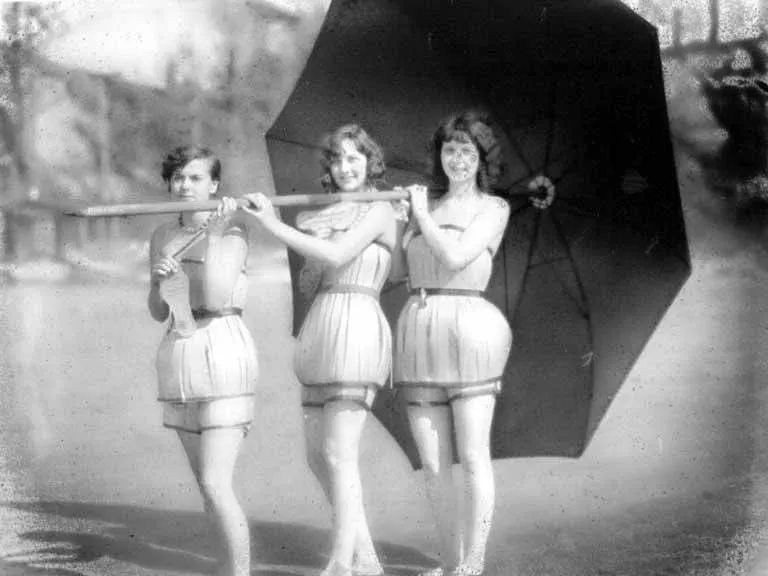
Photo: UW Digital Collections, No restrictions, via Wikimedia Commons
British weather has a way of making accessories out of necessities. We talk about coats, boots, scarves and gloves, but the umbrella often gets left by the door as an afterthought. That is a shame, because a well-made vintage brolly is one of the quietest pleasures in dressing. It has weight, a proper handle, a mechanism that clicks rather than clatters, and enough character to make a drizzly Tuesday in Leeds feel faintly cinematic.
Why the brolly deserves a second look
Most modern umbrellas are built to be lost. They are light, cheap and entirely forgettable. A vintage one asks a little more: you have to open it carefully, dry it properly and store it with a bit of respect. In return you get something repairable, often beautiful, and frequently much sturdier than the telescopic thing rattling around in the boot of the car.
There is also the handle. Wood, Bakelite, celluloid, horn, carved plastic, leather-covered crook: these are the details that make an umbrella feel like an accessory rather than emergency equipment. In 2026, when so much high-street outerwear is practical but anonymous, a vintage umbrella is an easy way to add a line, a colour or a small piece of history to an ordinary outfit.
A short history in ribs and handles
The umbrella has a long British life. Victorian walking sticks and parasols were status objects as much as weather cover, and by the late nineteenth century the steel-ribbed umbrella had become a familiar city sight. Edwardian and 1920s versions often had slim canopies and elegant wooden handles, made for walking to the office or the station rather than being stuffed into a tote bag.
After the Second World War, things got more playful. The 1950s brought novelty prints, compact shapes and brighter canopies; the 1960s gave us the clear dome bubble brolly, beloved of mods and anyone who wanted to see where they were going. Folding telescopic umbrellas became more common in the 1960s and 1970s, and the umbrella moved from a gentleman's accessory to something closer to everyday kit. British makers such as James Smith & Sons and Fox Umbrellas are still names to look for, though plenty of good unbranded ones turn up too.
What to look for at the car boot
Start with the canopy. It should be taut when open, with no brittle cracking along the folds. Small patches are fine if they have been done neatly; flaking coating and a strong musty smell are not. Vintage canopies are often nylon or cotton rather than modern polyester, so check the seams and the points where the fabric meets the ribs. A little wear at the tips is normal. A tear along a rib is a bargaining point, not necessarily a deal-breaker.
Then check the frame. Open and close it gently, and watch the runner as it slides up and down the shaft. It should move without forcing. Rust at the joints is common and not always fatal, but a bent rib or a snapped stretcher is a bigger job. Count the ribs if you are buying for repair: eight is standard, but some vintage umbrellas have more, and donor frames can be hard to find.
The handle should be tight, not wobbly. Wood can be sanded and oiled; Bakelite and celluloid can be polished; leather can be fed. Look for a ferrule at the top and a tip at the end, because missing ends make an umbrella look tired and let water into the frame. Finally, ask how it has been stored. An umbrella kept damp in a cupboard will have more problems than one that has been dried open.
Prices are still friendly. At a car-boot sale, a decent vintage umbrella might be £5 to £25; charity shops often ask £3 to £10. Specialist vintage shops and auction sites will charge more for branded or particularly fine examples, but the joy of this hunt is that a perfectly usable one can still cost less than a round of drinks.
Repairs that make sense
Not every vintage umbrella is worth saving, but many are. A new ferrule or tip is a simple fix. Loose handles can be re-glued. A slipping runner can sometimes be adjusted or re-sprung. Small canopy holes can be patched with a piece of waterproof fabric in a matching or deliberately contrast colour. If the frame is badly broken, it may be better as a donor for another umbrella than as a project.
Cleaning is gentle work. Wipe the canopy with mild soapy water, rinse, and dry it open in a well-ventilated room, never over a radiator. A little silicone spray on the moving parts can help, but avoid oiling the canopy itself. If the umbrella has a fabric case, wash it by hand and let it dry completely before storing. Repair cafés and local sewing shops are good places to ask about small jobs if you do not fancy doing them yourself.
How to wear one now
A vintage umbrella works best when it is not treated as fancy dress. With a waxed jacket and jeans, a sturdy wooden-handled stick looks right at home. With a trench coat, choose something slim and neutral, perhaps navy or olive, and let the handle do the talking. With tailored separates, a small folding umbrella in a leather case is neater than a long crook, though a slim vintage stick can look excellent if you are walking rather than commuting.
The colour is where you can have fun. A burgundy canopy lifts a grey wool coat; a checked one adds texture to a plain raincoat; a clear 1960s bubble brolly is cheerful with almost anything, as long as you are not heading into a formal meeting. Carry it over the arm rather than swinging it, and keep it dry when you get home. A vintage umbrella should look used, not wrecked.
A final word
The umbrella is not the most glamorous piece in the wardrobe, but it is one of the most reliable. A good vintage one will keep the rain off, make you smile when you press the catch, and last longer than the forecast. Start with one you actually like carrying. The rest is just weather.