The Tenner Test: Seven Charity-Shop Knits to Restyle for Winter 2026
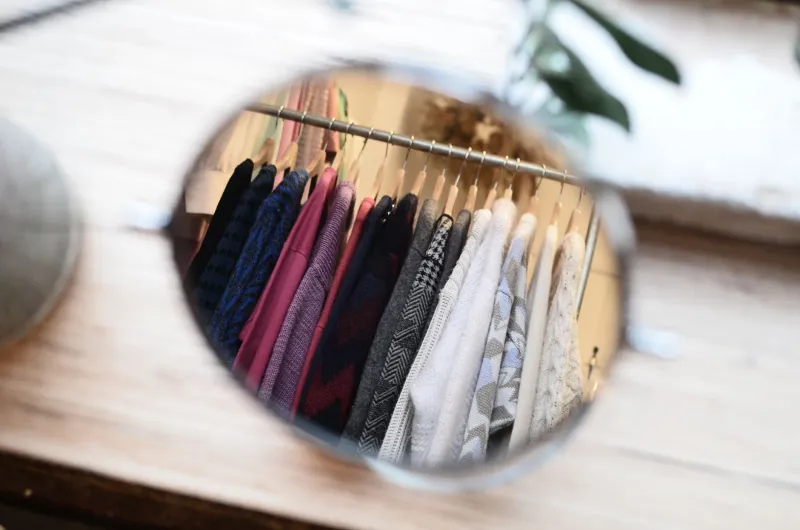
Charity-shop knitwear is one of the last honest bargains on the British high street. A tenner still buys a jumper with years of wear left in it, if you know what you are looking at. The mistake is falling for colour or nostalgia on the rail. Treat every secondhand knit as a small audit: fibre, moth risk, seams, fit, and the outfit you can actually build around it. This is the tenner test I use in 2026, followed by seven jumper archetypes that repay a little restyling.
The Tenner Test: Four Checks Before You Pay
First, read the label. Second, hunt for moth damage in good light. Third, check the shoulder seams and cuffs. Fourth, ask whether you would wear it three times before Christmas. If the answer is no, put it back. A jumper is only a bargain if it earns its space in a small British wardrobe.
Start With the Fibre, Not the Fantasy
Natural fibres are your friends: lambswool, Shetland wool, merino, cashmere blends, alpaca, and cotton for milder days. A little nylon can add strength, but a jumper that is mostly acrylic will pill, hold odour, and look tired by February. Check the care label too. Hand-wash wool is not a deal-breaker; a jumper that has already felted in someone else's machine is. If the label is missing, rub the fabric between finger and thumb. Wool has a spring and a slight crispness; acrylic feels slick and flat.
The Moth Question
Hold the jumper up to a window. Look under the arms, along the cuffs, at the waistband, and down the front. Small holes often hide in the nap. Run your hand over the surface and check for thinning, especially on the shoulders where a bag strap has rubbed. Moths love dark, undisturbed wool, so a garment that has been stored in a loft may need a warm wash and a fortnight in the freezer. That is manageable. A jumper with a trail of holes across the chest is not a tenner well spent.
Shoulders, Seams and Sleeves
A good knit should sit on your shoulders, not hang off them. Check the shoulder seam: it should land near the edge of your shoulder bone, with a little ease. Raglan sleeves are forgiving; set-in sleeves show poor fit quickly. Pull the sleeves gently to see if the cuffs are sound. Look at the side seams for twisting, and give the hem a tug. If the ribbing has gone slack, the jumper will ride up all day. Fit matters more than size on the label, especially with vintage sizing that bears little relation to 2026 high-street cuts.
Seven Archetypes Worth the Tenner
1. The Aran jumper — £8 to £15
A proper Aran should feel weighty but not stiff. Cream is classic, navy is easier to wear in town. Look for cable patterns that are tight and even, not stretched. Wear it with straight-leg jeans, a waxed jacket and boots for a Saturday market run. If it is too boxy, a half-tuck at the front is enough.
2. The Fair Isle — £6 to £12
Fair Isle is having another moment in 2026, which means more of it is surfacing in charity shops. Choose a yoke pattern in two or three colours you already wear. Keep the rest of the outfit plain: dark trousers, a simple coat, flat boots. A Fair Isle jumper with novelty motifs can tip into costume; a classic red-and-navy yoke will last for years.
3. The lambswool crew — £5 to £10
This is the workhorse. Navy, grey, bottle green or oatmeal, with a round neck that sits close. Wear it under a blazer for work, over a collared shirt at the weekend, or with a pleated skirt and tights. Check the elbows for thin patches; lambswool is soft but not indestructible.
4. The Shetland — £8 to £14
Shetland wool has a fuzzy, slightly hairy surface and a light warmth that suits central heating and cold buses alike. Look for muted colours: rust, moss, powder blue. Pair with corduroy trousers and a canvas bag. A Shetland that has been loved may have a little pilling; a cheap knit comb will sort that in minutes.
5. The mohair — £7 to £12
Mohair is the one to buy for texture, not practicality. It has a halo, a soft weight and a tendency to shed. Choose a size that fits without straining, because mohair does not forgive tight armholes. Wear it with wide-leg trousers and a simple coat, or over a slip dress with boots. Keep the rest of the outfit matte so the fuzz does the talking.
6. The cashmere blend — £10 to £18
Pure cashmere at a tenner is rare; a good cashmere-wool blend is more realistic. Check the underarms and cuffs for wear, and hold it up to the light for holes. A soft grey or camel blend looks expensive with dark denim and a trench. Wash it by hand, dry it flat, and it will outlast most fast-fashion knits.
7. The chunky rib cardigan — £8 to £15
A heavy rib cardigan is a coat substitute for mild winter days. Look for horn or wooden buttons, deep pockets and a collar that stands up. Wear it open over a fine knit, or buttoned with a belt and jeans. Be honest about the shoulders: an oversized cardigan can swamp a petite frame, while a too-small one will pull across the back.
The Outfit Test
Before you hand over your tenner, picture three outfits. One should be for a weekday, one for a weekend walk, and one for an evening pub. If you cannot build all three from clothes you already own, the jumper is not the problem. Vintage knitwear works best when it is the texture in a simple uniform, not the whole performance.
A Note on Care in 2026
Wash wool sparingly, in cool water with a pH-neutral wool detergent. Press the water out in a towel rather than wringing it, and dry flat. Store clean knitwear folded, with cedar or lavender if moths have been a problem. A small repair — a darned cuff, a rewoven moth hole — is part of the charm. The tenner test is not about perfection. It is about finding a jumper that has already proved it can survive a British winter.