Ten British Labels That Still Reward a Rumage: A 2026 Field Guide
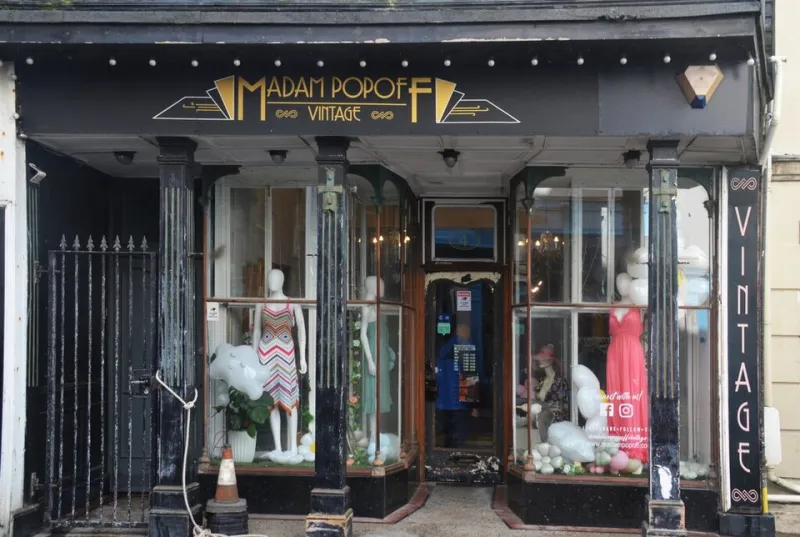
Photo: Rod Grealish , CC BY-SA 2.0, via Wikimedia Commons
There is a particular kind of charity-shop moment that never gets old. You pull a dress off a crowded rail, glance at the inside collar, and something clicks — a name you know, on a piece that clearly predates the last three decades of high-street production. The fabric has weight. The seams are finished properly. Somebody made this and meant it.
British labels are underrated in the vintage world, largely because our fashion history is told as a story of shops rather than couturiers. Yet the postwar period through to the early Eighties produced a remarkable run of home-grown manufacturers, most of them now gone, many of them quietly excellent. What follows is a working list — ten names to look for, how to read them on a label, and what is genuinely worth carrying home in 2026.
How to read a British label quickly
Before the names, three habits. First, check for a fibre content label — British manufacturers were early and diligent about this, and a missing content label on a garment that otherwise looks period usually means it was either home-made or re-labelled. Second, look for a 'Made in England', 'Made in Wales' or 'Made in Scotland' line; it is often stamped separately from the brand. Third, note the font. Typography dates a label faster than anything else: rounded sans-serifs lean Sixties, condensed serif capitals lean Forties and Fifties, anything with a rainbow or a lowercase logo is usually mid-Eighties onward.
Horrockses Fashions
The label to memorise first. Horrockses was a Lancashire cotton house that, between the late Forties and the early Sixties, produced printed cotton dresses of extraordinary quality — and employed named artists for the prints. Look for 'Horrockses Fashions Ltd' on a woven or printed label, often with a designer credit beneath. Quality markers: dense, cool cotton with a crisp hand, a metal side zip, generous facings, and pattern that matches across the centre-front seam. Collectors have pushed prices up, but a faded sundress with a small repair still turns up for £25 to £60 in the north of England.
Jaeger
Founded in 1884 as a woollens firm, Jaeger became the thinking woman's knitwear label and stayed there for the best part of a century. Early labels read simply 'Jaeger'; Sixties and Seventies pieces often carry 'Jaeger Boutique' or 'Jaeger of London'. The gold is wool jersey, camel hair coating and fine-gauge knitwear in colours that have aged well. Check the fibre label for pure new wool and be wary of anything with a high acrylic content from the Eighties — the shape rarely survives.
Laura Ashley
A Welsh label with a very readable timeline. Early Sixties pieces say 'Laura Ashley, Made in Wales'. By the Seventies you see 'Laura Ashley, London'; the Eighties adds 'plc'. The garments to hunt are cotton lawn and corduroy from before about 1985 — smocking, lace collars, tiny floral prints — because construction was still largely domestic. Anything with a paper-thin cotton and a lot of nylon trimming belongs to the later, licensed era and is best left on the rail.
Biba
Short-lived and much faked, which is part of the fun. Biba ran from 1964 to 1975 and its labels shifted constantly: early pieces are often unlabelled or carry a small printed mark; later ones use a brown-and-gold woven label or 'Biba London'. Because production runs were small, a genuine Biba dress may have no label at all — judge on the print, the cut and the surprisingly good jersey fabric. Prices are daft, so buy the look rather than the name.
Jean Muir
Scotland's finest contribution to British ready-to-wear. Jean Muir's jersey dresses are almost architectural, and the labels are easy to read: 'Jean Muir, London', often with 'Made in England' and a style number. Her Studio line is more common and much cheaper. Quality markers include beautifully weighted viscose jersey, immaculate internal finishing, and a distinctive deep navy that she used relentlessly. A Muir dress with a small mend is still a better buy than most new clothes in 2026.
John Smedley
Still trading in Derbyshire, which makes this the easiest label on the list to benchmark — you can compare a 1970s knit against a new one in the shop. Older labels read 'John Smedley, Made in England'; the finest pieces use Sea Island cotton or extra-fine merino. Look for the small woven side seam label and a dense, even knit. Charity shops still miss these with some regularity, particularly in the Midlands.
Pringle of Scotland
Border knitwear with a long memory. Look for 'Pringle of Scotland' with the lion rampant mark; older pieces may say 'Pringle Sports'. The argyle and intarsia knits of the Fifties and Sixties are the ones to take, provided the moths have stayed away. Turn the garment inside out and check the underarm and the fold lines before you commit — a hole in a Pringle is a heartbreak.
Mary Quant
Quant's Ginger Group brought cheap, cheerful, well-cut clothes to a generation, and the labels reflect the tiers: 'Mary Quant', 'Ginger Group', 'Mary Quant Made in England', often with the daisy mark. The most collectable pieces are the early Sixties pinafores and coloured tights-adjacent jersey, but the Seventies knits are wearable and far cheaper. Watch for the daisy appearing on things it never appeared on.
Daks
Simpson's house, and the origin of the Daks waistband — a genuinely useful piece of design history. Labels read 'Daks' or 'Daks London', sometimes 'Daks Simpson'. Tailoring from the Fifties and Sixties in Scottish tweed or fine worsted is the target; the house check is a bonus. Sizing runs small, so measure rather than trust the number.
Berkertex
Unfashionable and therefore affordable, which is exactly why it belongs here. Berkertex made dependable, well-finished daywear from the Thirties to the Seventies, with labels reading 'Berkertex' or 'Berkertex of London'. The coats and two-pieces are the finds: proper interfacing, generous seam allowances, decent wool. Nobody is fighting you for them, and in 2026 that is a recommendation.
Where to look, and what to pay
Regional charity shops still deliver best outside the big cities, particularly in Lancashire, Yorkshire, the Borders and the Welsh valleys — the places where these clothes were made and worn. Specialist fairs such as the long-running London vintage textile events reward early arrival with cash and a tape measure. Online, search by label rather than by style: 'Berkertex coat' will surface things 'vintage coat' never will.
A sensible 2026 ceiling: under £40 for Berkertex, Smedley and Daks; £40 to £90 for Jaeger, Pringle, Laura Ashley and Jean Muir Studio; and above that only for Horrockses, Biba and early Quant in good condition. Learn five of these labels properly and your strike rate on any rail improves immediately.